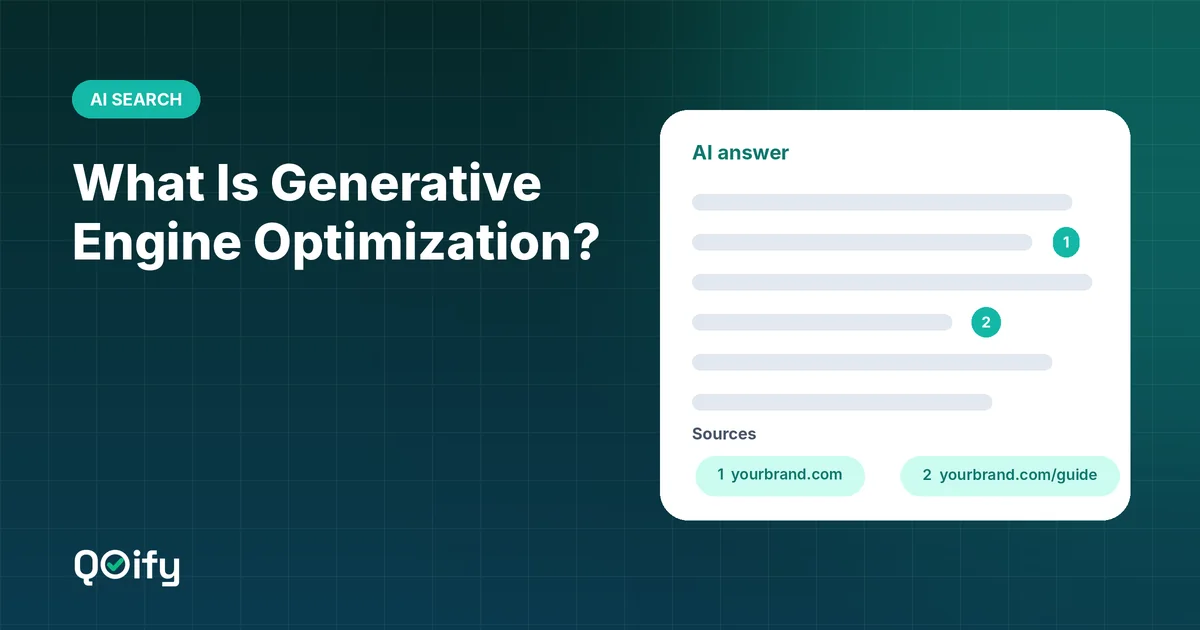
Generative Engine Optimization (GEO) is the practice of structuring and promoting your content so that AI answer engines, such as ChatGPT search, Perplexity, Google's AI Overviews and AI Mode, Gemini and Microsoft Copilot, can find it, trust it and cite it in their answers.
Traditional SEO aims for a blue link on a results page. GEO aims for something different: a mention or citation inside an answer written by AI. As more people ask AI assistants instead of scrolling through search results, being part of that answer is becoming as important as ranking.
Why GEO matters now
Search behaviour is changing in three ways:
- Answers instead of links. AI tools summarise information from several sources into one response. Users often get what they need without clicking anything.
- Fewer, more qualified clicks. When users do click a cited source, they usually arrive with clearer intent, because the AI has already explained the basics.
- Brand perception is shaped by AI. When someone asks "What is the best agency for X?" or "Is product Y any good?", the AI's summary becomes their first impression of your brand.
If your content is never used as a source, you are invisible in a growing share of discovery.
How generative engines choose sources
Each AI product works differently, but most AI search experiences follow a similar pattern:
- Understand the question and often break it into several sub-queries.
- Retrieve candidate pages using a search index (their own or a partner's).
- Read and extract the most relevant passages from those pages.
- Write an answer that combines information from multiple sources.
- Cite the sources that contributed specific facts or explanations.
That process rewards content that is easy to find, easy to read and easy to quote. A page that ranks reasonably well, loads fast, and contains clear, specific, well-structured statements has a much better chance of being picked.
GEO vs SEO: what is different?
| SEO | GEO | |
|---|---|---|
| Goal | Rank a page in search results | Be cited or mentioned inside AI answers |
| Unit of success | A page ranking for a keyword | A passage or fact being quoted |
| Main signals | Relevance, links, technical health, experience | Clarity, specificity, credibility, brand mentions, crawlability |
| Where you measure | Search Console, rank trackers | AI referral traffic, manual checks of AI answers |
| Content style | Comprehensive pages targeting keywords | Self-contained, quotable answers to specific questions |
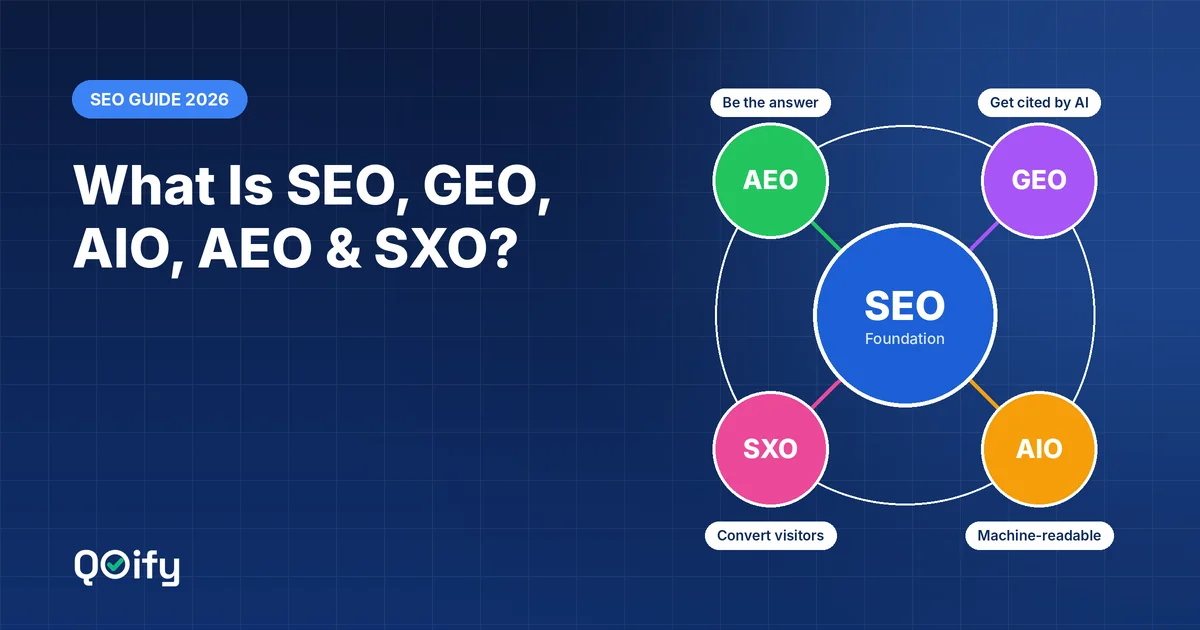
The two overlap heavily. Strong SEO remains the foundation, because AI systems commonly retrieve sources from pages that search engines already consider relevant and trustworthy.
The core principles of GEO
1. Answer first
Put a clear, direct answer in the first one or two sentences of the page and under each heading. AI systems extract passages, and a passage that answers the question on its own is the easiest to use.
2. Make every paragraph quotable
Write short, self-contained paragraphs that each make one point. Avoid answers that only make sense after reading three earlier sections. A good test: if a single paragraph were copied into an AI answer, would it still be accurate and understandable?
3. Be specific and back it up
Vague statements are rarely cited. Specific ones are. Include concrete numbers, named methods, dates, comparisons and examples, and link to the original source of any statistic. The research paper that introduced the term "generative engine optimization" in 2023 reported that adding citations, quotations and statistics tended to increase a source's visibility in generated answers.
4. Show who is behind the content
Display a named author with relevant experience, a short bio, and the date the page was last updated. Add Organization and Person structured data so machines can connect content to real people and a real company.
5. Use structure machines understand
- Descriptive H2 and H3 headings, often phrased as questions
- Bulleted and numbered lists for steps and features
- Tables for comparisons
- FAQ sections for related questions
- Structured data:
Article,FAQPage,HowTo,Organization,BreadcrumbList
6. Make sure AI crawlers can read your site
- Serve important content as HTML, not only through client-side JavaScript
- Keep pages fast and free of intrusive pop-ups
- Check that
robots.txtdoes not block AI crawlers such asGPTBot,OAI-SearchBot,PerplexityBot,ClaudeBotorGoogle-Extended, unless you have decided to block them - Keep your XML sitemap current
7. Build your brand beyond your website
AI systems form a picture of your brand from across the web. Consistent, positive mentions help them recognise and trust you:
- Up-to-date profiles on review sites and industry directories
- Guest articles, interviews, podcasts and conference talks
- Active participation in relevant communities
- Original research or data that others reference
- The same company name, description and contact details everywhere
8. Keep content fresh
AI search tools prefer current information for time-sensitive questions. Review important pages regularly, update facts and examples, and show the updated date.
A practical GEO checklist
On each important page
- A one or two sentence direct answer at the top
- Question-style headings with a direct answer under each
- At least one specific statistic, example or comparison, with a source link
- A short FAQ section with structured data
- Author name, bio and last-updated date
- Internal links to related, deeper articles
Across the website
- Organization structured data with logo, contact details and social profiles
- An About page that clearly explains who you are and what you do
- Fast, crawlable HTML pages and a current XML sitemap
robots.txtreviewed for AI crawlers- An optional
llms.txtfile listing your key pages for AI tools
Off the website
- Consistent business profiles and listings
- A plan to earn mentions in trusted publications and communities
- Reviews from real customers on relevant platforms
How to measure GEO
GEO measurement is still maturing, but you can track meaningful signals today:
- AI referral traffic. In your analytics tool, look for visits from sources such as
chatgpt.com,perplexity.ai,gemini.google.comandcopilot.microsoft.com. Track the trend month by month. - Manual answer checks. Each month, ask the main AI assistants 10–20 questions your customers ask. Record whether you are mentioned or cited, and how your brand is described.
- Branded search growth. More people searching for your brand name often follows increased visibility in AI answers.
- Conversions from AI visitors. Measure whether these visitors sign up, book calls or buy.
Common GEO mistakes
- Writing for algorithms instead of people. Keyword-stuffed or vague content is neither ranked nor cited.
- Burying the answer under long introductions.
- Unsupported claims with no sources or evidence.
- Blocking AI crawlers by accident through security settings or CDN bot protection.
- Anonymous content with no author or company information.
- Ignoring off-site reputation. Your own website is only part of what AI systems learn about you.
Conclusion
Generative Engine Optimization is not a replacement for SEO; it is the next layer on top of it. The fundamentals are familiar: fast, crawlable pages, clear answers, specific evidence, real expertise and a trusted brand. What changes is the unit of success, from ranking a page to having your words chosen, quoted and cited by AI. Start with your ten most important pages, rewrite them to answer first, add evidence and structure, and track how AI assistants describe you each month.